
See Our Latest Blogs
Welcome to Your Ultimate Resource for Vehicle Maintenance and Repair
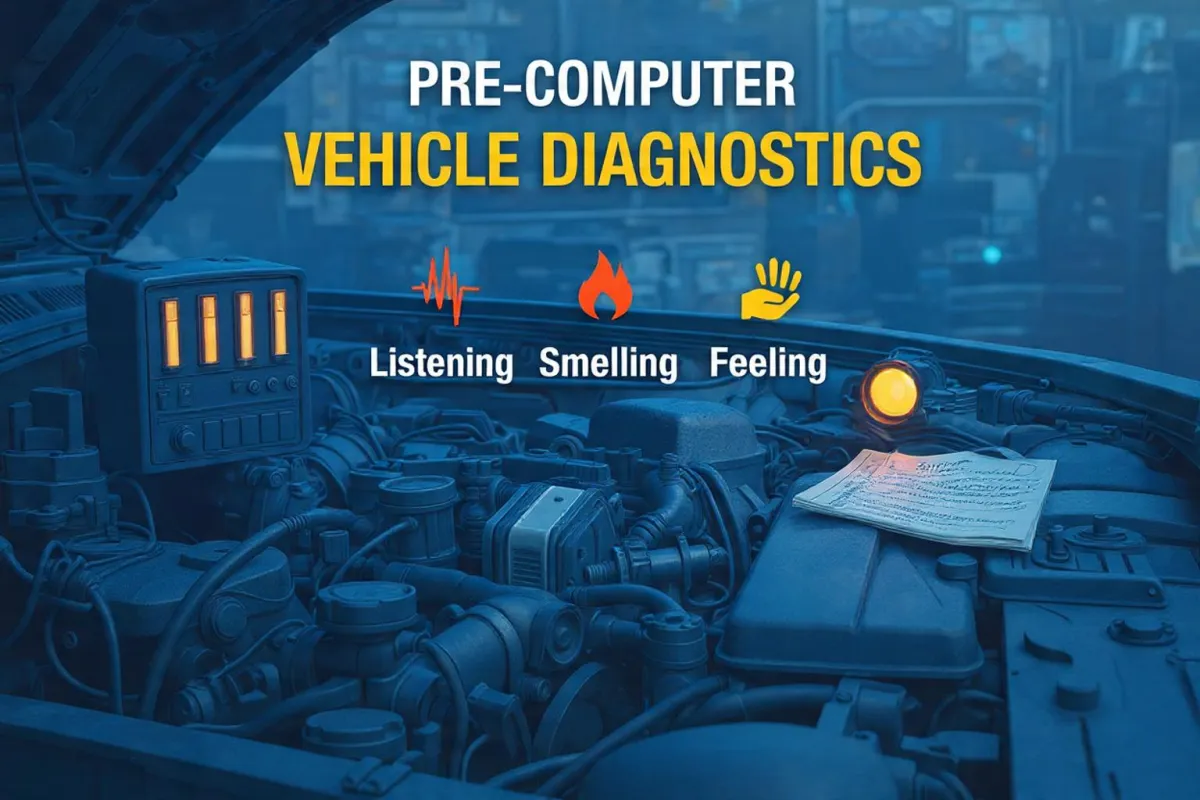
Before Computers: How Mechanics Diagnosed Problems by Ear
If you ever opened the bonnet of a classic car in the days before onboard computers, you’d find something somewhat enchanting and terrifying at the same time: silence — interrupted occasionally by a coughing engine, a drip of oil, or a mechanic with his ear pressed against a rocker cover like it’s some kind of very small, very oily stethoscope.
Today’s vehicles have more processing power than the rockets that once carried astronauts to the moon. Computers hum, diagnostics beep, sensors chatter more than Jamaican radio. But before all that, cars spoke in an entirely different language — one that only the keenest mechanics could understand.
Listening to the Engine
There was a time when the first rule of automotive troubleshooting was simply: listen.
Not to the dashboard. Not to the computer. Not to the sound the engine makes after you turn the key — but to the subtle, almost secretive murmurs an engine emits while it’s running.
The experienced mechanic could tell a misfire from a weak spark simply by the rhythm of the engine note. A knock here, a metallic ping there — it was like reading sheet music composed by pistons and valves.
Compare that to now: plug in a scanner and get a list of fault codes that could mean a dozen different things — each needing interpretation. Those codes tell us what’s wrong. But the old maestros could tell us why it sounds wrong.
The Smell of Trouble
If sound was one sense, smell was another — rather underappreciated, until something goes wrong.
A rich fuel mixture didn’t just affect performance; it carried an unmistakable scent — sweet and heavy. Oil burning in the wrong place gave off that acrid, metal-kissed aroma no owner ever forgot.
Fuel leaks weren’t just visible — they were olfactory. Even coolant issues could be detected before any gauge moved.
Today’s diagnostics will tell you a cylinder is misfiring. But in the days before computers, a mechanic could tell you which cylinder was misfiring by smell alone — and even guess whether it was fuel, spark or compression without ever touching a tool.
Vibration: The Unsung Communicator
Then there was the sense of touch.
Modern diagnostic garages now rely on data, waveforms and numbers. But older mechanics felt the vehicle — not literally, but through vibration and response.
A vibration at 37 kilometres per hour? That was likely a balance issue. A funny judder at 60? It was a tyre or suspension whispering secrets.
Some mechanics could detect a failing universal joint simply by the pattern of vibration as the car rolled over expansion joints.
Science now uses accelerometers. Back then, mechanics used fingertips, intuition and lungs full of exhaust.
Craft & Intuition: The Magic Between the Wrenches
All of these didn’t just make mechanics good at their job — they made them artists.
Intuition wasn’t mystical. It was experience shaped into instinct — shaped by thousands of hours listening, smelling, feeling, and learning a machine’s language.
A mechanic could close his eyes and tell which part was complaining, not by reading a manual but by reading the car.
This was craft.
Not guesswork — but a way of knowing.
The Arrival of Scanners
And then computers came along.
Suddenly vehicles screamed information at you from every sensor. Gone were the days of silent mystery and enigmatic clunks.
A plug-in scanner could reveal:
which cylinder misfired
which sensor was reading low
whether the airflow sensor was lying to the computer
Mechanics became interpreters of digital truth instead of auditors of sensory nuance.
This wasn’t bad — far from it. Computers helped catch problems earlier, diagnose issues that no human could detect by noise alone, and save both money and time.
But it also meant something else.
A New Era That Still Needs the Old Skills
Today’s diagnostic tools are remarkable. They are elegant, powerful, and indispensable. The ever-improving i-computer aids significant leaps in efficiency and accuracy.
Yet, as vehicles become more complex and customers demand more from their machines, one truth remains constant:
A good diagnostic still requires a highly skilled technician who can make sense of it all.
The scanner will tell you what is wrong —
but not always why it happened.
Not always when it matters most.
Not always how that truth relates to real-world conditions.
Only a seasoned technician — one who listens, watches, feels — can bridge the gap between digital codes and real mechanical life.

Introduction
Welcome to our blog, where we're dedicated to sharing expert tips, insights, and the latest news in vehicle maintenance and repair. Whether you're a corporate fleet manager or a private vehicle owner, our goal is to be your go-to resource for keeping your vehicles running smoothly and efficiently.
Our Mission
Our mission is simple: to provide you with valuable, accurate, and practical information that helps extend the life of your vehicles and keeps them in top condition. We understand that whether it’s a single family car or an entire fleet of corporate vehicles, maintenance and repair are crucial for safety, efficiency, and long-term cost savings.
What We Offer
Expert Tips: From seasoned mechanics and industry experts, our blog offers advice on everything from routine maintenance to troubleshooting complex issues.
Insights: We delve deep into the automotive world to bring you insights on the latest trends, technologies, and best practices in vehicle care.
News and Updates: Stay informed with the latest news in automotive technology, upcoming regulation changes, and what they mean for your vehicle maintenance and repair strategies.
DIY Guides: For those who love to get their hands dirty, our easy-to-follow DIY guides will help you tackle basic maintenance and repairs at home.
Product Reviews: Get unbiased reviews on the latest tools, gadgets, and products in the automotive market.
Community and Interaction
We believe in the power of community. That’s why we encourage our readers to interact, share their own experiences, and ask questions. Whether you’re a seasoned professional or a car maintenance newbie, your insights and queries are what make this blog a rich resource.
Our Programs
Support
Planning
Coordination
Monitoring
Reporting
Dispatching
Follow Us


Contact Us
Copyright 2023 - Proficiencia Holdings Limited (JA) - All rights reserved